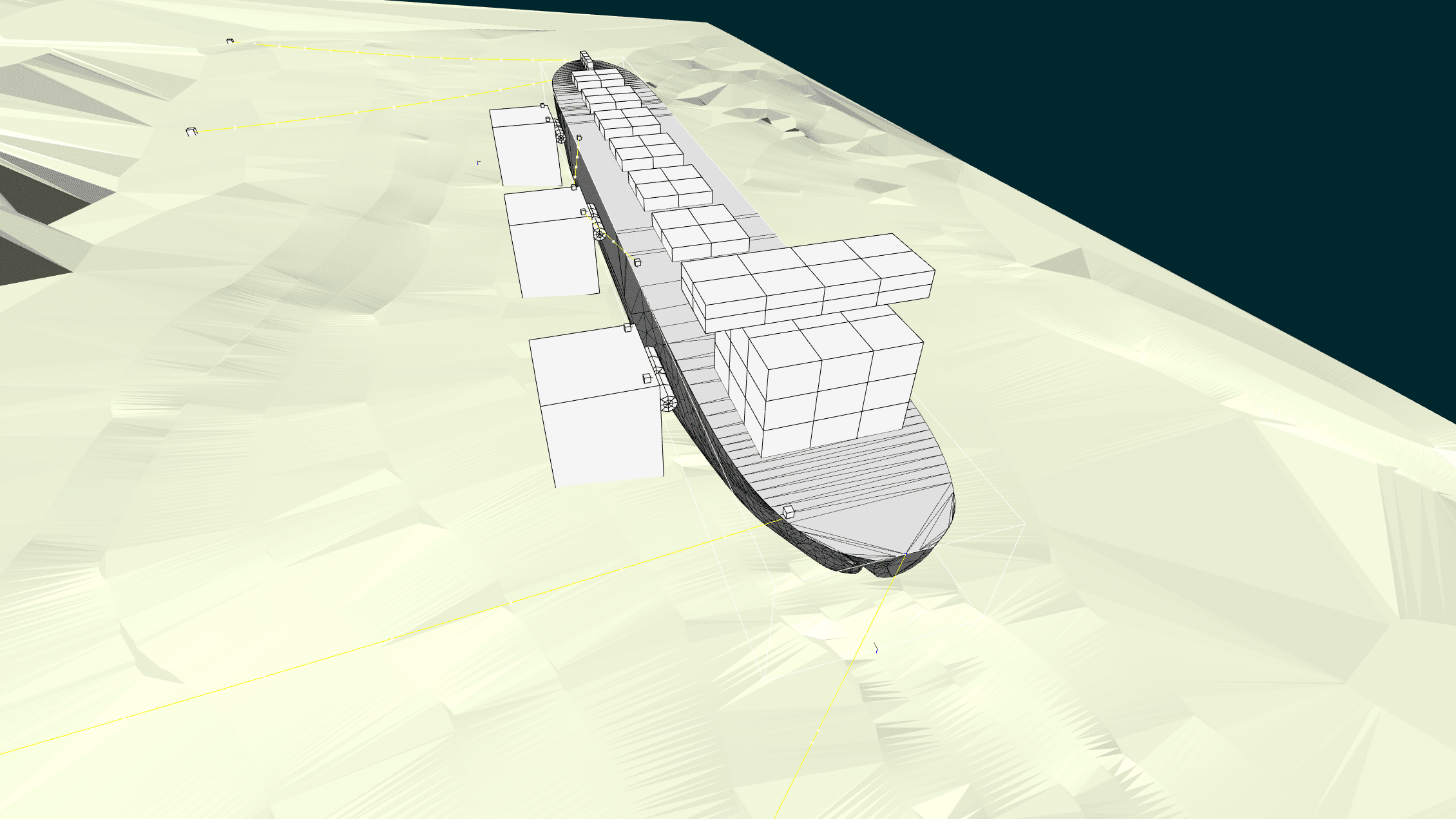
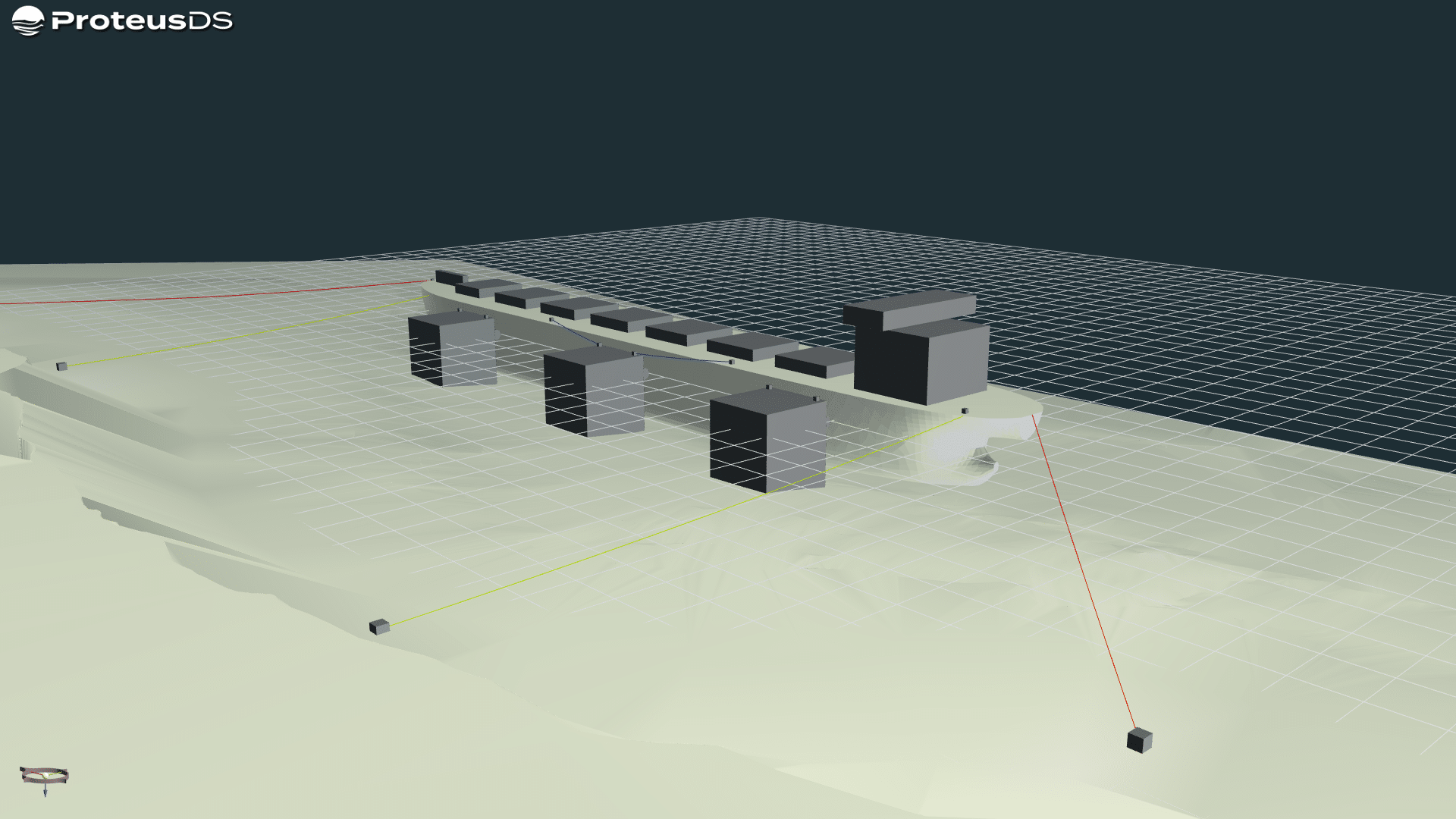
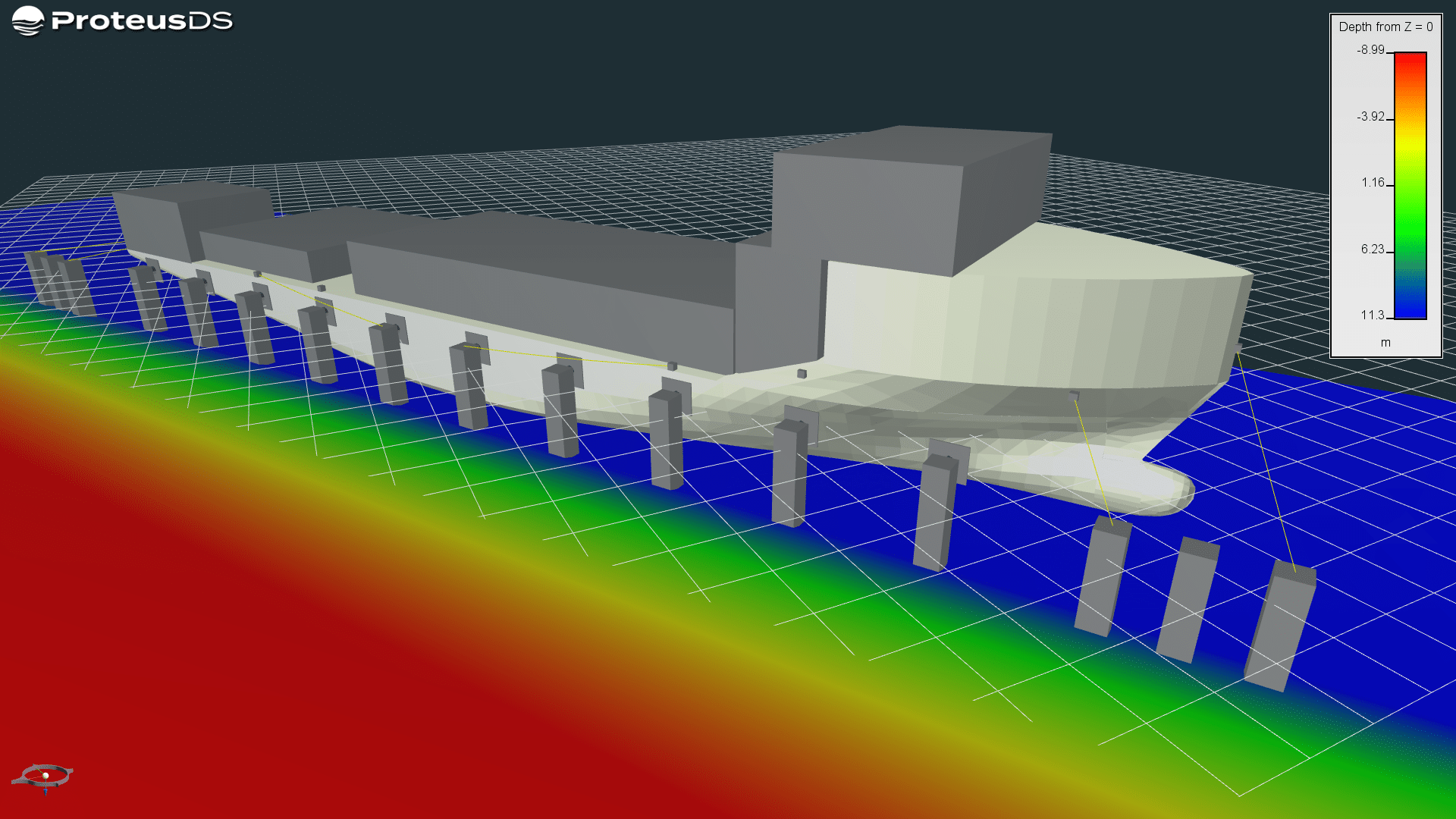
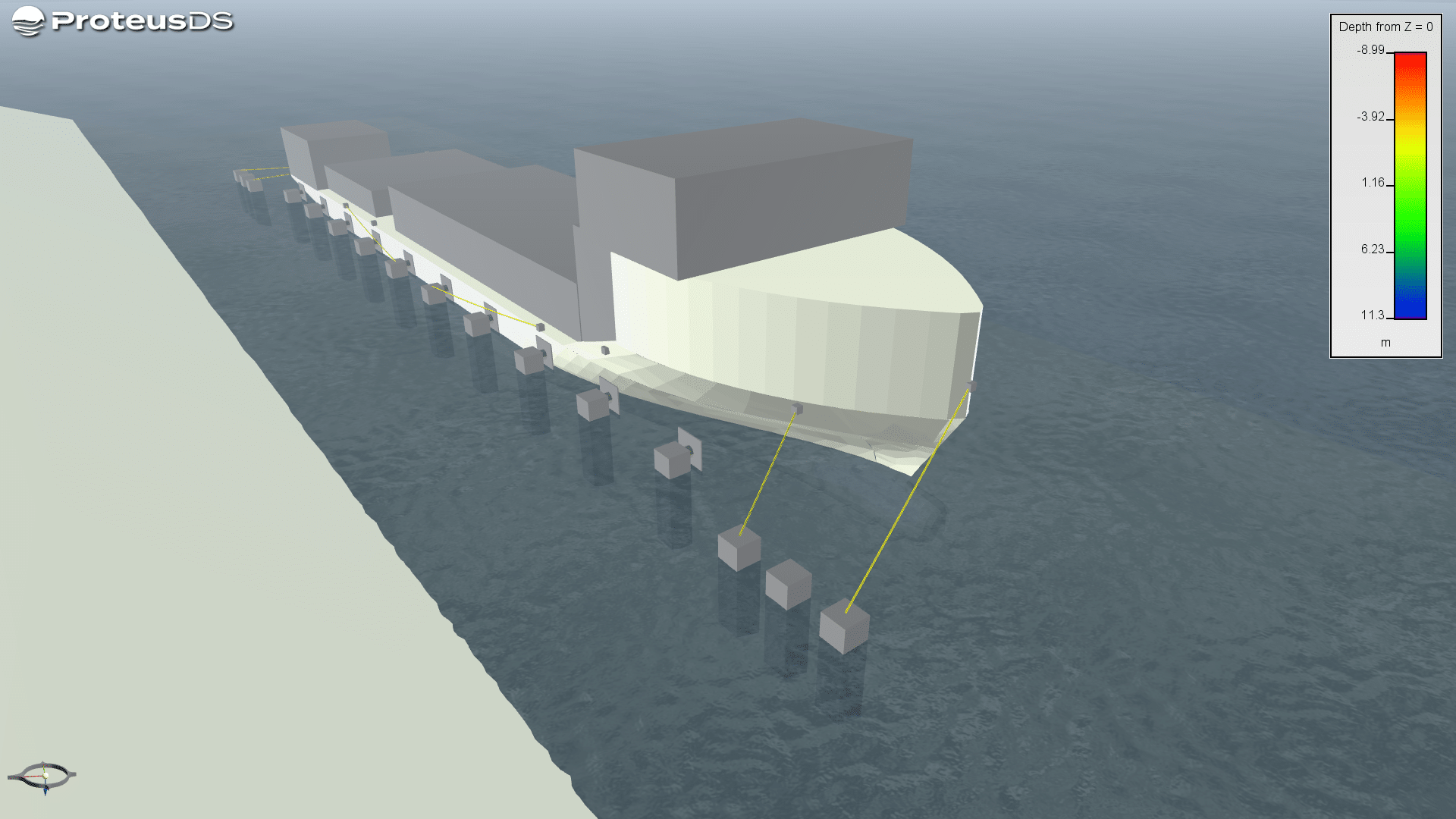
DSA Ocean helps port owners, terminal operators and marine infrastructure designers determine whether vessels can berth, remain safely moored and operate within defined environmental limits. Our analysis supports new terminal design, upgrades to aging infrastructure, accommodation of larger or different vessels, and the development of practical operating limits that improve safety and berth availability.
We assess how wind, waves, currents and water levels affect vessel motions, mooring-line tensions, fender reactions and the loads transferred to bollards, dolphins, cribs and supporting structures. As the developers of ProteusDS, we combine in-house dynamic modelling expertise with established tools such as OptiMoor to support practical design decisions, operational planning and independent design review.
Our services include:
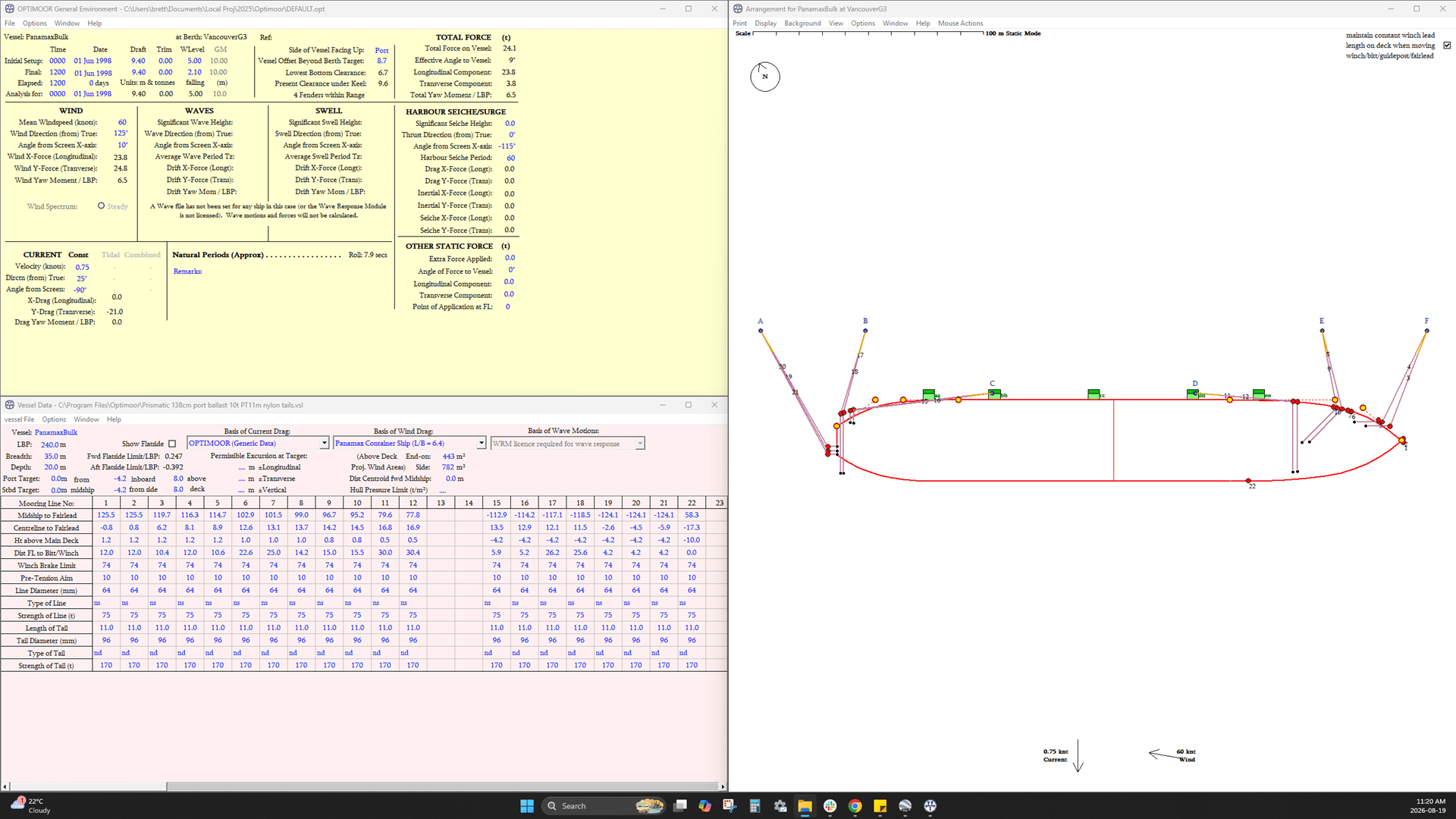
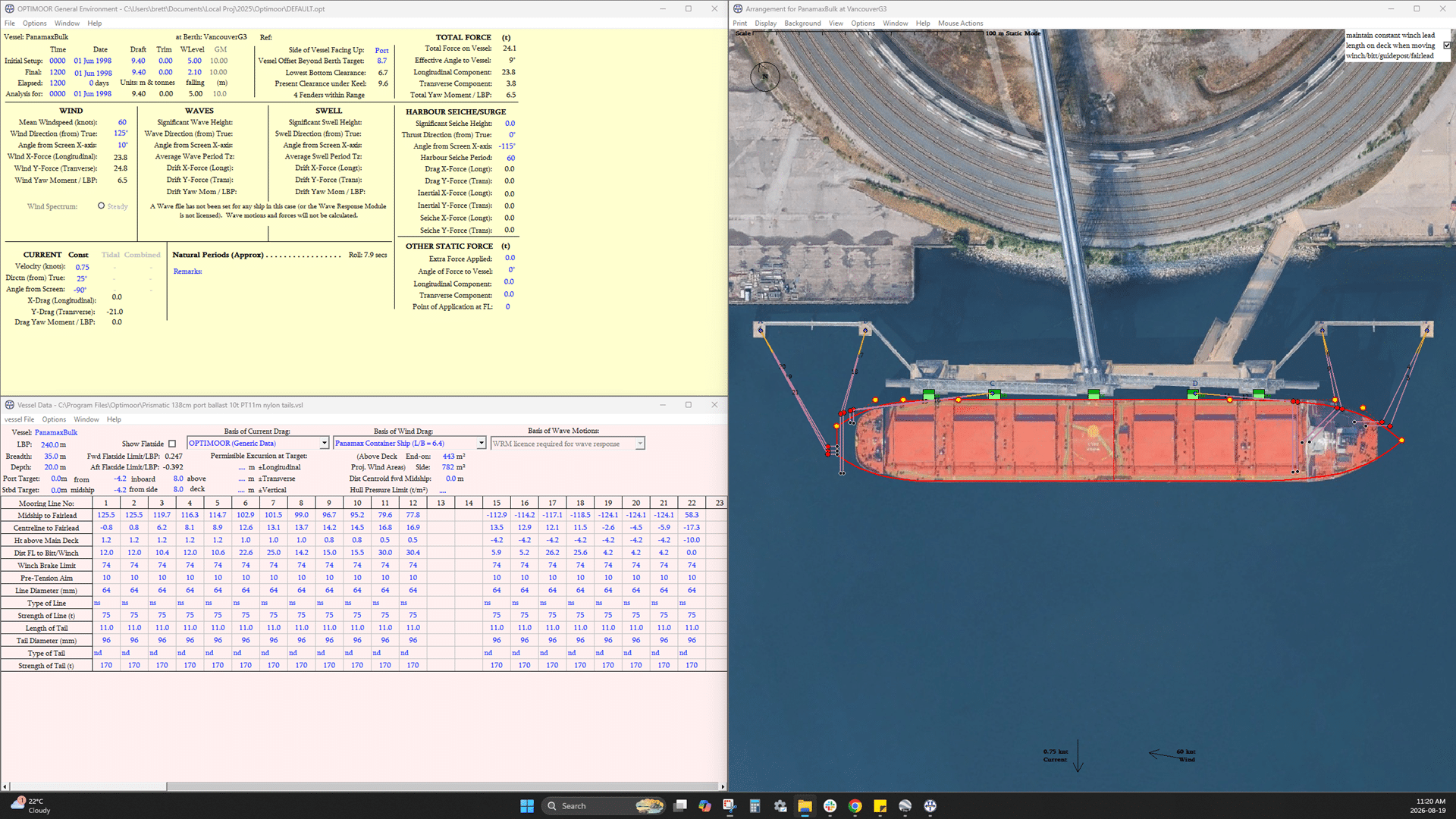
Static analysis is often an appropriate first step for evaluating vessel mooring arrangements under steady wind and current loads. DSA Ocean uses OptiMoor to assess line tensions, bollard loads, fender reactions and vessel offsets using established OCIMF methods.
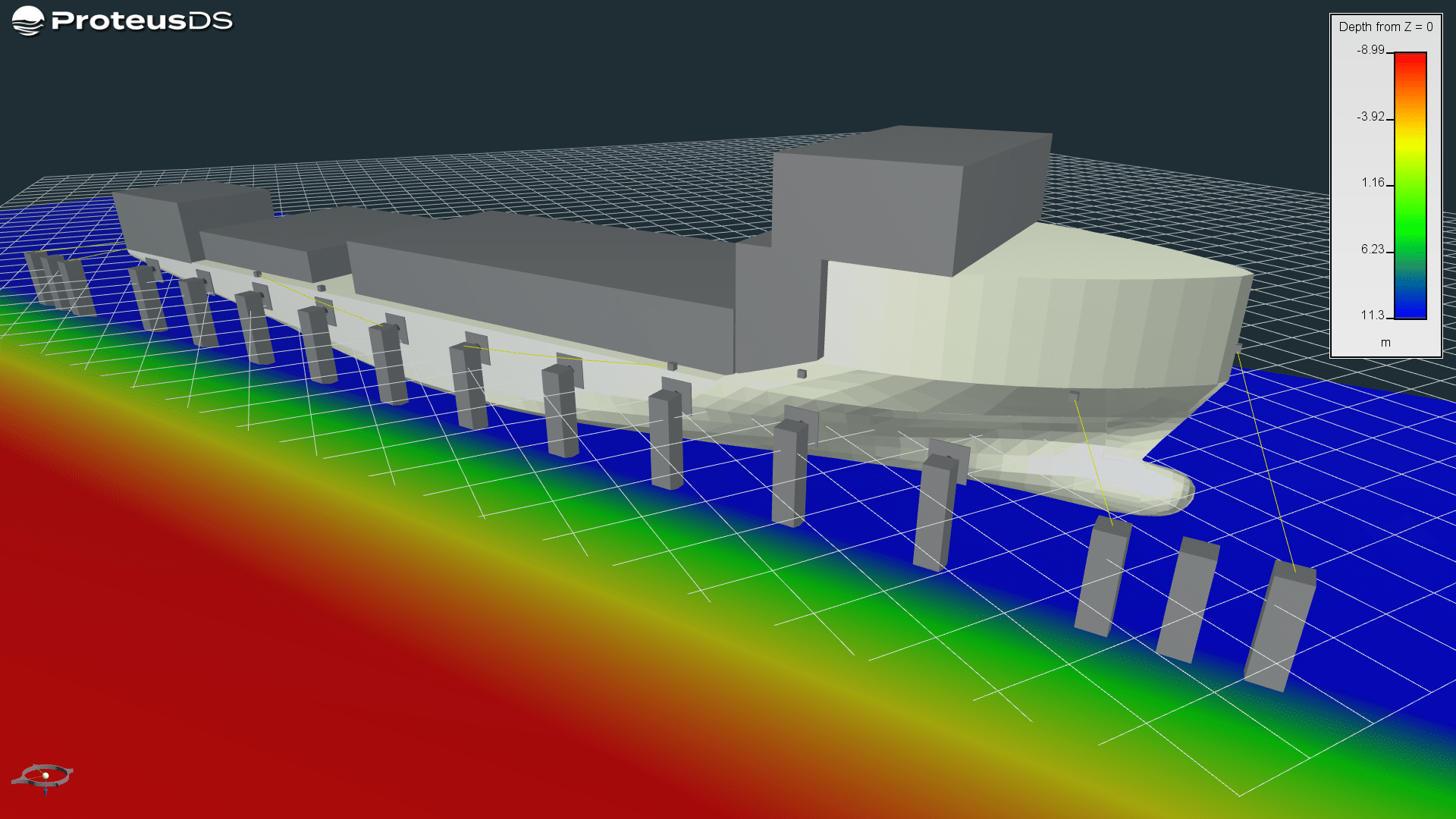
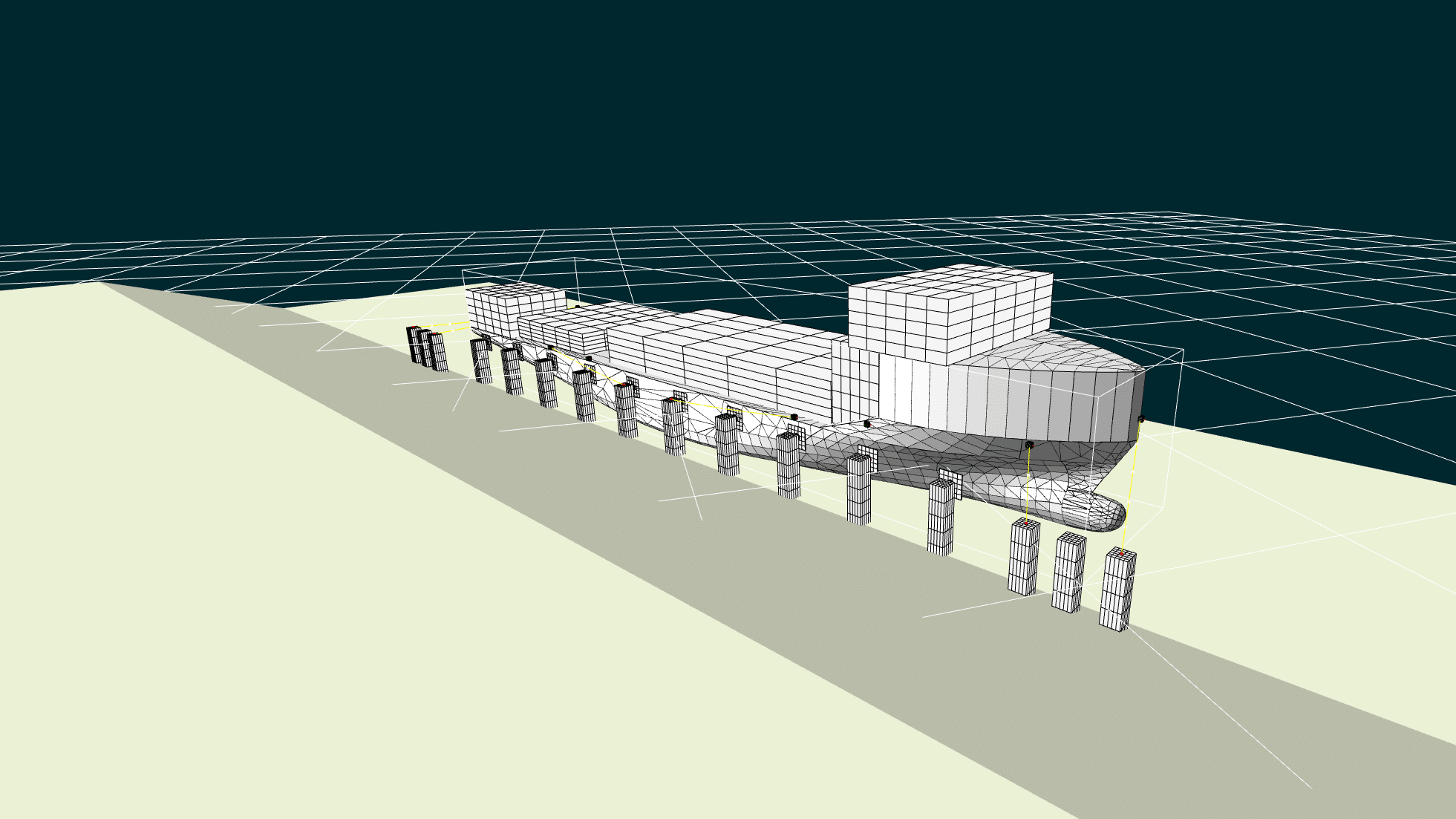
Where waves, vessel motions or changing loads are important, we use ProteusDS for time-domain dynamic analysis. This captures variations in mooring-line tensions, vessel movements and fender contact that a static assessment may not resolve. This provides a more complete understanding of load variation, peak line tensions, vessel movements and fender contact under realistic operating and extreme conditions.
We select the level of analysis appropriate to the project rather than applying the most complex model by default.
We develop site-specific wind, wave, current and water-level conditions using available records, hindcast data, nearshore modelling and, where needed, field measurements conducted by our own team. We consider realistic combinations and directions of environmental loading, providing consistent inputs for mooring analysis and terminal design rather than simply combining independent extremes. This helps avoid unnecessary conservatism and infrastructure costs while supporting safe, practical designs and operating limits.
Depending on the project, our analysis can provide:
DSA Ocean can work directly for terminal owners or provide specialist support to civil, structural and marine engineering teams.
With our main office in Victoria, British Columbia, and staff in Nova Scotia and Quebec, DSA Ocean supports marine terminal projects across Canada and internationally.
Share a brief description of your design or operating question, along with any available berth layouts and vessel particulars. We will help identify the information needed and an appropriate level of analysis to support your project.
Analysis may be required for a new berth, terminal upgrade, larger or different vessel, or review of existing bollards, dolphins, fenders and mooring arrangements. It can also establish practical operating limits where environmental conditions affect terminal operations.
DSA Ocean assesses mooring-line tensions, vessel movements, fender reactions and loads transferred to bollards, dolphins, cribs and supporting structures. We provide design loads and operating criteria that can be used directly by civil, structural and terminal designers.
Yes. We use OptiMoor for established OCIMF-based static analysis and ProteusDS for time-domain dynamic analysis when waves, vessel motions or changing loads are important. This allows us to apply the appropriate level of analysis for each project.
The required level of detail depends on the project stage and the decisions being made. DSA Ocean can begin with available wind, wave, current and water-level data, identify important uncertainties, and refine the conditions through site measurements or nearshore modelling where warranted. Completing the metocean and berthing and mooring analysis as one scope provides consistent design assumptions, reduces handoffs and helps avoid unrealistic or unnecessarily conservative loads.
DSA Ocean combines more than 20 years of marine engineering experience with industry-standard software and specialized modelling tools developed by our own team. We focus on practical results rather than simply producing larger loads, using realistic design conditions, appropriate interpretation of dynamic results, and clear recommendations for berth layouts, infrastructure requirements and safe operations.
We select standards and industry guidance to suit the vessel, terminal and project requirements. Common references include OCIMF MEG4 for mooring systems; UFC 4-159-03 for vessel moorings, including storm mooring; BS 6349-4 for fendering and mooring systems; and PIANC WG 186, WG 211 and WG 212 for mooring, fendering, vessel motions and berth operability. Relevant ISO and DNV guidance may also be applied for metocean conditions and environmental loading.
The applicable standards, design conditions and acceptance criteria are confirmed for each project.